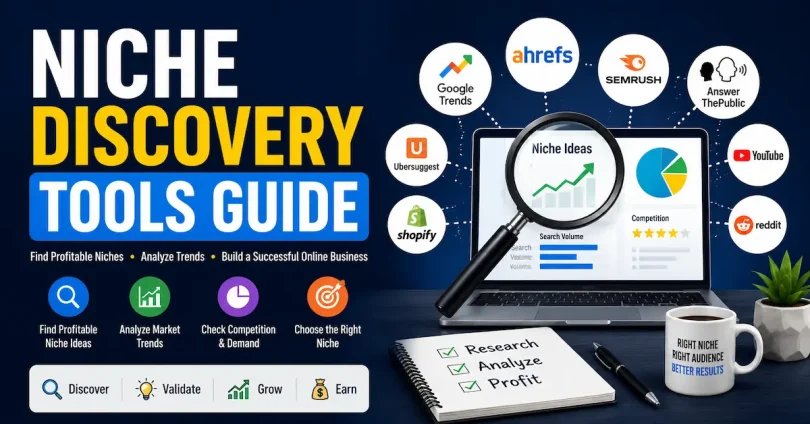

Choosing the right niche is one of the most important decisions you’ll make when starting a blog, affiliate website, YouTube channel, online store, or any other online business. Even the best content and marketing strategies can struggle if you’re targeting a niche with low demand, high competition, or poor monetization opportunities. niche discovery tools guide
The challenge is that many beginners choose a niche based on personal interest alone or follow popular trends without doing proper research. This often leads to wasted time, low traffic, and disappointing results.
Fortunately, niche discovery tools can make the process much easier. These tools help you analyze search trends, discover what people are interested in, evaluate competition, and uncover profitable opportunities that you might otherwise miss. Instead of relying on guesswork, you can use real data to make smarter decisions.
In this guide, you’ll learn what niche discovery tools are, why they matter, and how to use them to find profitable niche ideas. We’ll also explore the best niche discovery tools available, practical strategies for niche research, and common mistakes to avoid so you can choose a niche with confidence.
What Is a Niche?
A niche is a specific segment of a larger market that focuses on a particular audience, interest, problem, or need. Instead of trying to serve everyone, a niche allows you to target a smaller group of people who are looking for specific information, products, or solutions.
For example, “health and fitness” is a broad market, while “home workouts for busy professionals” is a niche within that market. The more specific your focus, the easier it becomes to attract the right audience and stand out from competitors.
Understanding a Niche with Examples
To better understand the concept, think of a niche as a smaller category within a larger industry.
Here are a few examples:
- Health & Fitness → Weight loss for women over 40
- Personal Finance → Budgeting for college students
- Technology → AI tools for small businesses
- Travel → Budget travel in Southeast Asia
- Food → Vegan recipes for beginners
These niche topics focus on a specific audience rather than trying to appeal to everyone interested in the broader subject.
Why Is Choosing a Niche Important?

Choosing a niche helps you build a focused brand and connect with a targeted audience. When people feel that your content directly addresses their needs, they are more likely to trust your recommendations and return for more information.
A well-defined niche can also make it easier to create content, rank in search engines, and generate income through affiliate marketing, advertising, products, or services.
Niche vs. Broad Market
Many beginners make the mistake of targeting broad markets because they seem to have larger audiences. However, broad topics are often highly competitive.
For example:
- Broad Market: Fitness
- Niche: Home Workouts
- Micro Niche: Home Workouts for Women Over 50
As you narrow your focus, competition generally decreases while audience relevance increases.
What Makes a Good Niche Discovery Tools Guide?
A good niche should have three key qualities:
1. Audience Demand
People should actively search for information, products, or solutions related to the niche.
2. Monetization Opportunities
The niche should offer ways to earn money through affiliate programs, digital products, services, sponsorships, or advertising.
3. Long-Term Potential
Choose a niche that can remain relevant for years rather than relying solely on short-lived trends.
Final Thoughts
A niche is more than just a topic—it’s a focused market that helps you reach the right audience with the right content. Whether you’re starting a blog, affiliate website, YouTube channel, or online business, selecting the right niche is one of the most important decisions you’ll make. By choosing a niche with strong demand, manageable competition, and good monetization potential, you’ll give yourself a much better chance of long-term success. Niche Discovery Tools Guide
How to Identify a Profitable Niche
Finding a profitable niche is one of the most important steps in building a successful blog, affiliate website, YouTube channel, or online business. A profitable niche is one that has a clear audience, consistent demand, manageable competition, and strong earning potential. Niche Discovery Tools Guide
Before investing your time and resources into a niche, it’s important to evaluate whether it can attract visitors and generate revenue over the long term. Niche Discovery Tools Guide
Check Search Demand
The first step is to determine whether people are actively searching for information related to your niche. If there is little or no interest, it will be difficult to attract traffic regardless of how good your content is. Niche Discovery Tools Guide
You can use tools like Google Trends, Ahrefs, SEMrush, or Ubersuggest to analyze search volume and interest over time. Look for niches that show consistent or growing demand rather than sudden spikes that may disappear quickly. Niche Discovery Tools Guide
For example, a niche like “personal finance” has steady search demand throughout the year, while a temporary trend may only attract interest for a short period. Niche Discovery Tools Guide
Analyze the Competition
A niche may have high demand, but if competition is extremely strong, ranking your content and gaining visibility can be difficult.
Research the websites already targeting your niche and evaluate:
- Content quality
- Domain authority
- Backlink profiles
- Search engine rankings
- Audience engagement
If the first page of search results is dominated by large brands and established websites, consider narrowing your focus to a more specific sub-niche where competition is lower.
Evaluate Monetization Potential
A niche should provide multiple opportunities to generate income. Even if a niche attracts traffic, it may not be profitable if there are limited ways to monetize it.
Common monetization methods include:
- Affiliate marketing
- Display advertising
- Sponsored content
- Digital products
- Online courses
- Consulting services
- Physical products
Before choosing a niche, check whether companies offer affiliate programs, products, or services that align with your target audience.
Look for Audience Problems and Needs
The most profitable niches usually solve real problems or help people achieve specific goals. People are more likely to spend money when they need a solution to a challenge they are facing. Niche Discovery Tools Guide
Ask yourself:
- What problems does this audience have?
- What questions are they asking online?
- What solutions are they searching for?
- Are they willing to pay for those solutions?
Platforms like Reddit, Quora, Facebook groups, and online forums can help you discover common pain points and opportunities.
Consider Long-Term Growth Potential
Some niches become popular for a few months and then disappear, while others continue growing for years. A profitable niche should ideally have long-term potential and not depend entirely on short-lived trends. Niche Discovery Tools Guide
Use trend research tools to determine whether interest in your niche is increasing, stable, or declining. Niches with steady or growing demand are generally safer choices for long-term projects. Niche Discovery Tools Guide
Find a Specific Sub-Niche
Many broad niches are highly competitive, making it difficult for new websites to gain traction. Instead of targeting a large market, focus on a smaller segment with a clearly defined audience. Niche Discovery Tools Guide
For example:
- Fitness → Home Workouts
- Home Workouts → Home Workouts for Busy Professionals
- Personal Finance → Budgeting
- Budgeting → Budgeting for Students
A specific sub-niche allows you to build authority faster and attract a more targeted audience. Niche Discovery Tools Guide
Validate Your Niche Idea
Before making a final decision, gather data from multiple sources and validate your niche idea. Niche Discovery Tools Guide
Check:
- Search demand Niche Discovery Tools Guide
- Competition level Niche Discovery Tools Guide
- Audience interest Niche Discovery Tools Guide
- Monetization opportunities Niche Discovery Tools Guide
- Long-term growth trends Niche Discovery Tools Guide
If your niche performs well in all these areas, it is likely a strong candidate for your online business or content project.
Final Thoughts
A profitable niche is not simply a topic you enjoy—it’s a market with real demand, reasonable competition, and clear monetization opportunities. By researching search trends, analyzing competitors, understanding audience needs, and validating your idea with data, you can choose a niche that has the potential to grow and generate income for years to come. Niche Discovery Tools Guide
you may also like it;
Scale Business Fast Methods That Drive Real Growth
Fast Growth for Beginners: Smart Strategies to Grow
Future Market Trends Guide: Top Insights to Grow Your Business in 2026
Market Trends for Business Growth: Proven Strategies to Boost Success in 2026
Best Niche Discovery Tools for Beginners
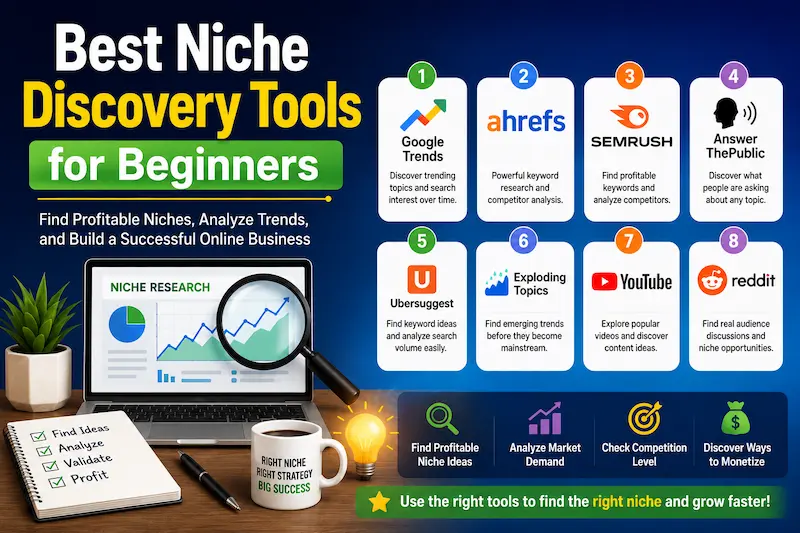
Once you understand what makes a niche profitable, the next step is finding niche ideas backed by real data. Niche discovery tools can help you uncover trending topics, analyze search demand, evaluate competition, and identify opportunities that have the potential to generate traffic and revenue.
Below are some of the best niche discovery tools that beginners and experienced marketers can use to find profitable niches.
Google Trends
Google Trends is one of the most popular free tools for niche research. It shows how interest in a topic changes over time, helping you identify growing trends and avoid niches that are losing popularity. Niche Discovery Tools Guide
Key Benefits
- Completely free to use
- Tracks search interest over time
- Compares multiple niche ideas
- Identifies seasonal trends
- Shows regional interest
Best For
Finding trending and evergreen niches before investing time in content creation. Niche Discovery Tools Guide
Ahrefs
Ahrefs is a powerful SEO tool that helps you discover niche opportunities through keyword research and competitor analysis. It provides valuable insights into search volume, ranking difficulty, and traffic potential. Niche Discovery Tools Guide
Key Benefits
- Extensive keyword database
- Competitor research tools
- Traffic estimates
- Content gap analysis
- Backlink data
Best For
Finding low-competition niches with strong traffic potential.
SEMrush
SEMrush is another all-in-one marketing platform that helps users discover niche opportunities and analyze competitors. Its keyword research features make it easier to evaluate niche demand and profitability.
Key Benefits
- Keyword research tools
- Competitor analysis
- Market insights
- Trend monitoring
- Content planning features
Best For
Marketers who want detailed data on niche opportunities and competitors.
Exploding Topics
Exploding Topics helps users discover trends before they become mainstream. The platform identifies rapidly growing topics across various industries and markets.
Key Benefits
- Early trend detection
- Growing niche ideas
- Market forecasting
- Easy-to-understand reports
Best For
Finding emerging niches with strong future potential.
AnswerThePublic
AnswerThePublic collects real search queries and questions people ask online. It helps you understand audience interests and uncover content opportunities within a niche.
Key Benefits
- Reveals audience questions
- Generates content ideas
- Identifies long-tail keywords
- Helps understand user intent
Best For
Finding niche topics and content ideas based on real user searches.
Reddit is often overlooked as a niche discovery tool, but it can provide valuable insights into audience problems, interests, and discussions.
Key Benefits
- Real user conversations
- Unfiltered audience feedback
- Niche community discovery
- Problem-solving opportunities
Best For
Identifying underserved markets and audience pain points.
YouTube
YouTube can be a powerful source of niche ideas because it shows what content people actively watch and engage with.
Key Benefits
- Content demand validation
- Trending topic discovery
- Audience engagement insights
- Video-based niche research
Best For
Discovering niches for blogs, YouTube channels, and digital products.
Amazon Best Sellers
Amazon’s Best Sellers section can reveal profitable product-based niches by showing what consumers are buying.
Key Benefits
- Product demand insights
- Consumer trend analysis
- Niche product opportunities
- Buyer intent research
Best For
Affiliate marketing websites and eCommerce businesses.
Final Thoughts
No single tool can guarantee a profitable niche, which is why successful niche research often involves using multiple tools together. Start with free tools like Google Trends, Reddit, and YouTube, then use advanced platforms such as Ahrefs or SEMrush for deeper analysis. Combining data from different sources will help you make more informed decisions and increase your chances of choosing a niche with long-term growth potential.
What is a niche discovery tool?
A niche discovery tool is a platform that helps you find profitable niche ideas by analyzing search trends, audience interests, keyword demand, competition levels, and market opportunities. These tools help you make data-driven decisions instead of relying on guesswork.
What is the best free niche discovery tool?
Google Trends is one of the best free niche discovery tools available. It allows you to track search interest over time, compare niche ideas, and identify emerging trends. Other useful free options include Reddit, YouTube, and Answer The Public’s free version.
How do I know if a niche is profitable?
A niche is generally considered profitable if it has consistent search demand, an active audience, manageable competition, and multiple monetization opportunities such as affiliate programs, advertising, digital products, or services.
Conclusion
Choosing the right niche is one of the most important steps toward building a successful online business, blog, affiliate website, or content platform. A well-researched niche can help you attract the right audience, create valuable content, and generate long-term income.
Instead of relying on guesswork, niche discovery tools provide valuable data that helps you identify market demand, analyze competition, and uncover profitable opportunities. Tools like Google Trends, Ahrefs, SEMrush, Reddit, and AnswerThePublic can help you make informed decisions and avoid investing time in niches with little growth potential.
When evaluating a niche, focus on key factors such as search demand, competition, audience needs, monetization opportunities, and long-term sustainability. Remember that the most profitable niches are often those that solve real problems and serve a specific audience.